Monday, August 4, 2014

ROLEX Deepsea D-BLUE Dial EDITION

By TLex While Rolex were putting the finishing touches to the presentation of their latest model launch scheduled for August 4th, WIS sleuths were busying themselves, trying to find out what indeed it was. One of them cunningly checked the source code attached to the teaser image that was posted on Rolex's official website and saw a line of code that read, 'deepsea d-blue dial', and so the cat was out of the bag or was it?!


Of course Rolex immediately responded by renaming the teaser image that related to the said code, but was it too late? Nevertheless the speculation continued with a renewed focus on what form this blue faced Deepsea would actually take on? Would Rolex go the route of the Submariner WG, or would they do something a little more unexpected? Perhaps something so radical that it was beyond our imagination!


The mere fact that Rolex have released a new model in the summer is already quite unexpected; however given that the world premier of James Cameron's Deepsea Challenge 3D movie also falls on August 4th, it did make it an appropriate time and occasion to unveil a new DEEPSEA variant.


And so for the greater majority of the world August 4th came and went. But where was this big reveal? I must have refreshed Rolex�s pages a hundred times. Well, I�m not sure what to make of it, but here it finally is; introducing the new Rolex DEEPSEA D-BLUE Dial Edition in celebration of James Cameron�s epic dive to the deepest place on earth - the bottom of the Mariana Trench.


With its two-color gradient dial recalling the ocean�s twilight zone, where deep blue fades into inky black as the last trickle of light from the surface disappears into the black abyss, and its green luminous �DEEPSEA� text (the same green used for James Cameron's Deepsea Challenge submersible), it certainly is unexpected. Apparently it was unveiled at selected Rolex boutiques across Asia and the rest of the world.


For all intents and purposes it is the same as any other DEEPSEA, at least physically and mechanically. It features an Rolex's innovative 'Chromalight' display on its dial with a distinctive blue glow that lasts up to twice as long as that of standard luminescent materials. The lume capsule in the center of the triangular, 12hr bezel marker also contains the same luminescent material.


Owing its name to the legendary DSS (deep sea special) experimental wristwatch that in 1960 successfully made its historical descent to the deepest point in the ocean (at a depth of 10916 meters), the Rolex DEEPSEA has its own claim to fame - namely, being one of the deepest rated production mechanical watches that are available, today with a water-resistance of 3900 meters (12800 feet).


The DEEPSEA was engineered to meet the demands of professional divers; a robust, precise and reliable divers watch capable of handling extreme depths; it was unveiled by Rolex some 6 years ago in 2008 (has it really been that long?!).


The history of Rolex and water-resistance, however is even longer, dating back several decades. It is steeped in the pioneering spirit that led them to the development of the earliest divers watches in the 1950s and the most extreme water-resistant watches spanning more than 50 years. They remain the only watch company to have had not one but two of their wristwatches descend into the ocean�s deepest and darkest trench.


Watches like the Submariner and the Sea-Dweller have seen decades of real-life experience stretching back to the pioneering days of underwater exploration and at the highest level of commercial diving.


Watches like the Deep Sea Special and Deepsea Challenge have made history, capturing the imaginations of those of us that dream of venturing into the dark abyss ourselves.


And so for me, it is the Rolex Deepsea that has found the happy medium between a daily divers watch such as the Sub or S-D and an extremophile such as the DSS or Deepsea CHALLENGE. It seems to offer the best of both worlds; with all the functionality and wear-ability of the former, but with just enough of the excitement and drama of the latter!


Nothing quite says� Rolex diver� like a black dial and matching black bezel. No, color is more befitting the abyss (where there is a complete absence of light), and so for me Rolex�s new DEEPSEA D-BLUE Dial Edition, while an intriguing new variant is no substitute for its black faced predecessor.


For some it will be little more than a novelty; perhaps not one for the seasoned dive watch connoisseurs to lust after, either; time will tell. Still, for what it is, it is kind of subtle, the execution is elegant and playful, and there is no denying that it is evocative of the James Cameron�s descent into the Marianas Trench!


Perhaps it will grow on me over time. But for the moment, I will continue to treasure my black faced DEEPSEA � it is perfect just the way it is!

Read More

Sunday, August 3, 2014

ZODIAC Heritage Sea Dragon AUTO

By TLex With a Swiss automatic movement and a Sapphire crystal, ZODIAC have made a recent update of their celebrated Sea Dragon collection. The classic, barrel-shaped Stainless steel case has a water-resistance of just 10atm, however -


the Heritage Seadrgon Automatic combines both timeless and modern design elements to create something that feels very much nautical. Its dimensions include: 39mm x 39mm with a case thickness of 12.50mm and a lug width of 20mm.


There are six variants of the watch: Ref. ZO9900 with its steel case, bracelet and silver dial, Ref. ZO9901with its steel case, bracelet and green dial, Ref. ZO9902 with its rose-gold plated case, black leather band and dark grey dial,


Ref. ZO9903 with its gold plated case, dark brown leather band and cream dial, Ref. ZO9904 with its steel case, dark brown leather band and blue sun-ray dial (my personal favorite) and Ref. ZO9905 with its steel case, tan leather band and red dial.

Prices are from 995 (leather) - 1195USD (steel). BTW Zodiac are planning a reintroduction of their vaunted Sea Wolf in spring 2015!

http://www.zodiacwatches.com/store/Zodiac/en_US/shop/zodiac-watches.html
Read More

ManchesterWatchWorks TatoskoQ

By TLex This is the ManchesterWatchWorks TatoskoQ, their second model and debut diver. Named after the legendary Native American lake creature, the Tatoskok that is said to dwell in the depths of Lake Champlain, Vermont!


At what depth the giant lake creature is supposed to lurk, I am not sure, but I can tell you the the MWW TatoskoQ's polished 316L Stainless steel case is good to 20 ATM, the equivalent of 200 meters of water-resistance.


The case features a 6mm knurled and engraved screwdown crown, a flat Sapphire crystal with an inner anti-reflective coating, an engraved screwed down caseback. Dimensions inc. 42.5mm (diameter) x 11mm (thick) 47mm (lug to lug) with 22mm drilled lugs.


Further divers features include: a 43mm knurled unidirectional 120 click-type divers bezel with an aluminum insert with a C3 12hr marker and a swallow-tail 12 o'clock marker on the dial, inspired by the international diver down flag (nice touch).


The dial is in black with a textured sandpaper like finish with raised C3 luminous markers and arrow hands with a red-tipped seconds indicator. You can choose the dial with or without the 4 o'clock date window.


The TatoskoQ is powered by Swiss Ronda 715Li quartz movement with a 10-year battery life. It comes on a Black PU divers strap with an engraved buckle plus an MWW custom designed NATO strap also with an engraved buckle.


Some nice details - shame it isn't an auto! Price is 359USD. For further details follow the link HERE . . .

http://www.manchesterwatchworks.com/
Read More

Wednesday, July 30, 2014

GRUPPO Ardito NumeroZERO


� buysluxurywatchesformen
Read More

CX SWISS MILITARY WATCH Conger Nero AUTO

By TLex I was just wondering when the world's leading manufacturer of deep diving chronographs was going to release something new; it's been a while!


I am very pleased to introduce to you, CX Swiss Military Watch's newest 100 piece Limited Edition diving chrono, the Conger Nero Auto.


It was actually released at Baselworld this year, but somehow went undetected by my dive watch radar. It takes its name from the aggressive, Conger eel, an ocean predator that can grow up to 10 feet long and is endowed with a set of razor-sharp teeth that have on occasion met with a diver who got too close to it!


The Conger Nero is water resistant to 2000 meters and has a stealthy black appearance thanks to its DLC (diamond like carbon) coating that is highly scratch resistant, ensuring that the watch will retain its pristine appearance for many years.


With a formidable looking case that puts me in mind of the 12,000 feet (lots of DNA) and with equally formidable dimensions, the Conger Nero's solid Stainless steel case measures 48.5mm in diameter with a thickness of 22.5mm and has a total weight of 375 grams.


The case boasts an X-large screwdown crown with side-guards, screwdown chrono-pushers and a screwdown caseback with a Limited Edition engraving.


The chronograph pushers are fully operational with unscrewed pushers to a depth of 300 meters. If diving below 300m, the pushers have to be screwed tight to ensure maximum water-resistance.


Further divers features include: an anti-reflective coated Sapphire crystal, a Helium escape valve, a uni-directional rotational divers bezel and a water-resistant to 200 atm, 6600 ft or 2000 meters plus a 25% safety margin in accordance with ISO 6425 norms.


As well as the above, the Conger Nero is fitted with a black DLC coated solid Stainless steel bracelet with hex-screwed lug-ends and links. It features a solid Titanium double pusher folding clasp with a divers safety catch and extension.


So what's powering this swarthy beast? Of course it's a 7750. A chronometer-certified automatic chronograph ETA cal. 7750 Valjoux C.O.S.C. with 25 jewels, 28�800 oscillations/h, a power reserve of 48h -


- an Etachron regulator system, a Glucydur balance bridge, a Nivaflex mainspring, Antichoc with Incabloc shock-absorber and an anti-magnetic ISO 764, 4800 A/m rating.


Functions include: hour; minute; small second at 9h, a chronograph with 30 minute counter at 12h, 12 hour counter at 6h, central second counter and a day/date display at 3 o'clock. Its dial, which can be had in either: black, blue with a sunburst finish, silver or yellow has Superluminova applied hands and markers.


The Conger Nero Auto comes in a Limited Edition of 100 pieces, presented in an XL black lacquered wooden box.


Its list price is 4300USD, but I believe they're being sold for 3450USD on the Charmex site, HERE.

Read More

Tuesday, June 10, 2014

Packaging Tips for Shipping Clocks

If you own a small or medium size clock or gift business, you know all too well the problems shipping clocks with the hands exposed can be. Especially, when you cannot afford custom packaging. Here are some idea’s we have picked up over the years.

Protect Exposed Clock Hands:

I like to use small Styrofoam blocks that are cut to ½” to 1” square, especially with hands that are 5” or longer. 1” Styrofoam sheets are a common Home Depot item. The trays bulk clock movements are shipped in also provide another source of Styrofoam. Set the clock hands at 6:00. Very carefully slide these little Styrofoam blocks along the face of the clock and onto the ends of the clock hands. Sometimes tape or rubber bands can be used for added stability. This should help to protect the hands in most applications.

We also sell plastic hand protectors: https://buysluxurywatchesformen.blogspot.com/clock-parts/hand-protectors/

These are protective covers that are specifically designed to cover and protect the clock hands that are 5” overall or less. They are normally held in place with rubber bands, but in some cases tape can be used.

Protect The Exposed Hand Shaft:

Every clock movement has a shaft sticking out of it where the clock hands are installed. If the end of this hand shaft is too close to the inner wall of your packaging, then it is very easy to damage during shipping. All you have to do is use about 4”- 6” sections of cardboard tubes, rolled up double walled corrugated or about 3”-4” strips of Styrofoam blocks. Hold them in place with a rubber band around the clock. Just make sure that the cardboard tubes, or Styrofoam blocks are ¾” or more inches higher (or thicker) than the end of the hand shaft they protect.

If your clock movement is in a closed case with a glass or plastic lens, or cover it’s much easier. The primary concern in this case is “shock”. Using bubble wrap to insulate and distance the clock from the inner walls of the packaging is probably best. Try to pack as if someone might play football with your box.
Read More

Friday, March 7, 2014

Replacing A Mechanical Movement With A Battery Operated Quartz Movement

Often times this change has to be made for simple economic reasons; if the old mechanical movement is worn out, the price of a new German made mechanical movement can be very high. Sometimes it’s also just for less work and maintenance. Either way, some considerations have to be made when changing a spring wound or weight driven movement for a battery operated movement. If you think your clock may have any value, keep the original mechanical movement lightly oiled in a plastic bag and store safely.

First remove the clock hands. If you have a second hand it will normally just pull off. The minute hand (the longer one) is usually held in place by a small round nut that needs to be unscrewed, or a tapered pin which must be removed. After this minute hand hardware is removed, pull the minute hand off. The hour hand (the shorter one) is normally just pressed on and can be pulled off. Mechanical movements are usually fastened to the clock dial or the back or front of the clock case by four metal "feet".(see drawing) If you unscrew the nut holding each foot in place you will be able to remove the mechanical movement from the case. Every clock case is different, but these suggestions will work in most situations.


Once the old mechanical movement has been removed, you can measure the depth, or dial thickness at the mounting hole. It can either be just a metal clock dial, or a metal clock dial on a 1/8" - 1/4" piece of plywood. This thickness will help to determine what shaft length of a battery operated movement would be best.

Clock hands are rarely interchangeable between mechanical and battery operated movements. The good news is that you have over 40 pairs to pick from:

https://buysluxurywatchesformen.blogspot.com/clock-parts/hour-minute-hands/

If your clock movement has a pendulum you can see, then do not assume that your pendulum will operate on a new battery operated quartz movement. It may be too heavy. If your pendulum is 16" long or less, then all of our pendulum movements will normally operate at this length, or shorter, using one of our 16" adjustable pendulums. Just tell us which pendulum Bob (the round disc at the bottom of a pendulum) and clock hands you would like when ordering.

If you have a 16" to 25"pendulum then you can use the PD200:

https://buysluxurywatchesformen.blogspot.com/clock-part/pd200-heavy-duty-pendulum-drive/

And one of these 25" ADJUSTABLE pendulums:

https://buysluxurywatchesformen.blogspot.com/clock-part/25-adjustable-rod-bob/

If your pendulum is in the 25" to 41" range, then you need to use a separate pendulum drive that will operate a pendulum up to 8 ounces. See the PHDPD:

https://buysluxurywatchesformen.blogspot.com/clock-part/heavy-duty-pendulum-drive/

Taking out an old mechanical movement and replacing it with a battery operated movement can often be done in a hour or less, just get a good ruler or tape measure, a pair of needle nosed pliers and you should be "good to go" to get the battery operated movement you need. Just let us know how we can help.
Read More

Friday, January 3, 2014

Choosing a Replacement Movement - Interactive

Inevitably it will happen, you'll have to replace parts for your clock. Batteries die and leak, motors burn out, and sometimes hands can get damaged. But, that's why we're here! We can help you find the parts you need, even if you don't know very much about how your clock works.

It's not too hard, you just have to follow some instructions and take two measurements and answer four questions, that's it. Just fill in the form by clicking on the link below and we will e-mail you back with suggestions. You compare to make the final decision. Please include all requested information.

It's probably impossible to cross reference any manufacturers part numbers you may see, as you may have already learned. It's all about finding an equivalent. So let's figure this out together!

Replacement Parts Form
Read More

Tuesday, November 12, 2013

Choosing Clock Hands For A Replacement Movement

This simple step is often overlooked. Lot’s of people think whatever clock hands they have, will fit a new movement. Not usually true. The mounting holes are not standardized. So, if you already have the clock hands, you can just choose a similar length and style from us. If you do not have hands, then a few simple rules should be followed so you can correctly choose what you need from us.

It all starts with measuring the diameter of the clock face, or clock dial:
https://buysluxurywatchesformen.blogspot.com/clock-part/11-1-8-clock-dial/
Take a look at this clock dial. If yours looks similar, then measure to between the 2 parallel lines outside of the 3:00 and 9:00 positions, and divide in half. Or you can measure from the center of the clock dial, To in between these 2 parallel lines, and now you know the length of your minute hand. You do not have to be exact, but be within a ¼”. It is also possible to trim hands to a shorter length. You only measure the minute hand from the mounting to the tip, so do not be concerned about the length of the hour hand, as it is typically 2/3 of the length of the minute hand. All of our hour and minute hands are sold by the pair.

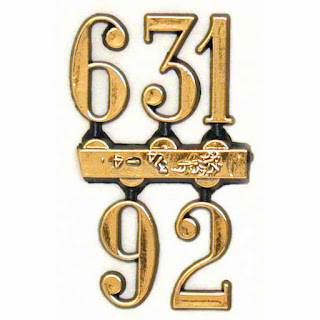
You can also use press on numbers to make your clock dial. See the set of 4 digits below (12, 3, 6 &9)
https://buysluxurywatchesformen.blogspot.com/clock-part/set-of-4-arabic-numbers/
Normally you would select hands that would come to about the middle of the numbers, but there is no set rule. You can also use almost anything you want to act as “numbers” or “indicators”. Try our Gold Roman or Arabic (regular) adhesive backed numbers, our metal or plastic clock dials, buttons, wood toy wheels, nuts & washers, dried flowers, upholstery tacks, poker chips or dice, seashells, stones, bottle caps, photos, almost any small object. Just be creative!
Read More

Friday, October 4, 2013

Removing A Battery Operated Clock Movement

Analog clock movements (with clock hands, not digital) don't just float in the air; they are always attached to something when they are telling time. It can be a traditional wood or metal clock case, or a novelty case such as a sea shell, mounted photo, tennis racquet or 12" vinyl record.  Almost anything. Eventually though, they get old and need to be replaced. It's pretty easy if you follow our simple instructions.

To remove the clock movement you will need to remove the clock hands first. If you have a second hand, this will normally pull off. Thin needle nosed pliers can be used to pull upward on the back of the second hand near the hub to remove.

The minute hand can either be pressed on the minute hand shaft, or held there by a small round nut (as shown above). If it's a "press on", then just pull it off. If there is a small round nut, then hold the minute hand still while turning the small round nut in a counter-clockwise direction until small round nut comes off. Gently pull the minute hand upward to remove.
Almost all hour hands are "press on", so rock hour hand gently while pulling away from the clock movement. Thin needle nosed pliers can also be used under the hour hand at the hub to assist in removing it.

Now that the clock hands have been removed, it's time to get the movement out of whatever clock case it is in. Most battery operated clock movements are installed by a system called "Center Fixation". Some type of nut is threaded onto an exposed threaded metal shaft, or interior threaded shaft, and holds the  clock movement in place by tightening the threaded nut. Unfortunately these nuts can vary widely, but they all do the same thing. So regardless of what you have, this nut  just needs to be unscrewed.  Needle nosed pliers or wrench will work for a hex nut. "Collar nuts" often have either 2 or 4 slots in the top collar that can be "persuaded" by a slotted screwdriver. Sometimes the movement itself can be unscrewed by turning counterclockwise.

Clock movements can also be held in place at the back of the case by using small screws or built in "pressure clips".  In the case of screws, then just unscrew whatever is there. With pressure clips, press both of the clips away from the movement at the same time and the movement should come free. In rare cases a double faced adhesive tape is used. Whatever method is the case, then do your best to undo whatever system may have been used to hold the clock movement in place.

Now that you have the clock movement removed from the case, get yourself a good ruler and start measuring. Replacing a battery operated movement with exactly the same model can be extremely difficult, and not necessary. Please read "First Time Clock Repair" in the Blog section of our web site.

A few careful hand shaft measurements have to be taken to determine what the best part is for you. What we need to know is the overall height of your hand shaft and the thickness of the case material that the hand shaft has to go through. Once you have these measurements you are ready to get a part number for exactly what you need.

If this is not enough help, then have all the clock parts handy, a good ruler, and give us a call at 1-888-827-2387 and input Ext.#300 for Technical Support.
Read More

Thursday, August 29, 2013

When the Clock Hands Are Free, Take ‘em…!


Most of the clock movements we offer include a FREE CHOICE of multiple sets of hour and minute hands. It's your choice,. Just tell us what you want! For some reason, some customers think the hands that they currently have in their possession are going to fit a different clock movement. Rarely happens. If it does, buy a lottery ticket that day.

There is no "standardization" of the mounting holes in clock hands. It's that simple. The mounting holes in clock hands are measured to within a few thousandths of an inch, and there are dozens of possibilities.. Put your ruler away.  Unless you have good calipers or a micrometer, you are not going measure the mounting holes in clock hands. We primarily use the American "I" shaft system, but it is only popular here, and only some imported movements use it. Almost  all of our movements use the "I" shaft. The best feature of the American "I" shaft is that it uses a small round nut to lock the minute hand in place. It's very secure.

In all of our categories of clock hands, at the top of the first page on the web site, we  show an excellent profile drawing of the actual mounting hole sizes for the clock hands listed in that section. We also are sure to link every clock movement we sell with the clock hands that can be used with that movement. Just go to any movement page and click on "clock hands" at the bottom of the movement page to see our selection..
Read More

Subscribe Via Email

Enter your email address:

Delivered by FeedBurner